

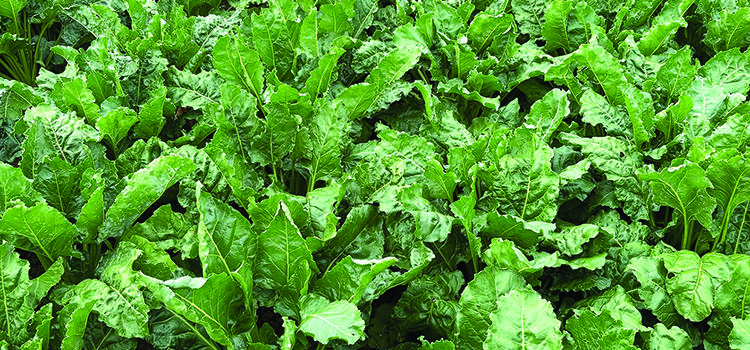
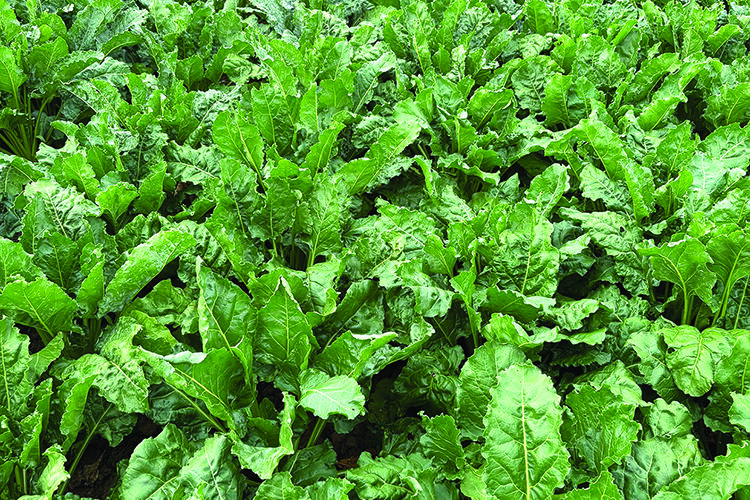

Untreated
Treated
Beet yields have improved in trials carried out on biostimulants – with better tolerance against key diseases too.
Two plot trials during the 2024/25 growing season were carried out by Michael Rodger of Richard Austin Agriculture. Yields increased by 9% with improved disease tolerance against cercospora leaf spot, rust and powdery mildew.
Green leaf coverage was much better in crops treated with products from biostimulant specialist Orion FT compared to a control crop which was only given a standard fertiliser and fungicide, said Mr Rodger.
Trial results
The best result came from using a combination of Sirius and Pluton. Sirius is a silicon-based biostimulant and Pluton is liquid plant growth-promoting rhizobacteria (PGPR) containing the naturally occurring bacteria Bacillus velezensis.
“Plants treated with the biostimulants established faster and grew deeper seeking roots, which was of particular benefit in a year that we experienced severe drought conditions,” explained Mr Rodger.
Four 10-metre plots were used for the trial. Sugar content rose from 17.3% to 18% in beet treated with Sirius and Pluton. A full field trial is planned to further explore the effect of the biostimulants on sugar beet.
A second simultaneous trial of the same crop size was treated with Trident Plus, a biostimulant that incorporates copper, zinc and cobalt micronutrients, using natural citric polymer to boost nutrient uptake.
Trident Plus was found to be the best performing treatment for rust but a trial crop with Sirius and Pluton showed better results for cercospora and powdery mildew. Both crops were better equipped to deal with disease and pest pressures.
“Trident Plus performed better on overall yield,” said Mr Rodger. “We saw a 10% increase, but Sirius and Pluton were more effective at helping reduce cercospora and powdery mildew damage.”