

More farmers are increasing their use of manure as they seek to cut costs and improve soil performance.
Rising fertiliser prices and a stronger focus on soil health are accelerating the shift towards manure. Growers say they are prioritising organic matter to improve structure, water retention and long-term productivity.
Bagged fertiliser costs have soared further since conflict in the Middle East broke out last month. Manure offers a locally sourced alternative to imported fertilisers while supplying key nutrients such as nitrogen, phosphorus and potassium.
The change places greater emphasis on how farms apply organic materials. Application accuracy and timing now matter more as growers try to match nutrient supply with crop demand and reduce losses.
Organic content
An increasing number of growers now view soil organic matter as central to resilience. Better structure improves drainage, reduces compaction risk and supports root development.
Contractors have responded by building supply chains with livestock farms to secure manure. Arable businesses without stock increasingly rely on these agreements to access sufficient volumes and maintain nutrient inputs.
Robert Alexander, of AJ Alexander & Son, says his business has scaled up its use of organic manures across 2000ha. “One application of straw manure is worth at least five years of cover crops,” he says.
“We’re on a big drive to improve soil health, particularly on farms where soil health has been ignored,” he says. It also helps crops cope with periods of drought or excess rainfall, making output more consistent.
The business now applies around 20,000 tonnes a year, using a mix of pig, cattle, duck and chicken manures. These inputs help rebuild organic matter more quickly than cover crops alone.
Applying manure accurately remains a challenge, particularly in wet conditions. Timing is critical when spreading on growing crops, where poor conditions can damage soils or limit uptake.
“We are currently in the process of spreading manure on wheat which is particularly difficult in the current conditions following all the winter rain,” Mr Alexander says.
Growers now demand greater precision from equipment. Even spread patterns and controlled application rates help reduce variability across fields and improve nutrient use efficiency.
Overcoming constraints
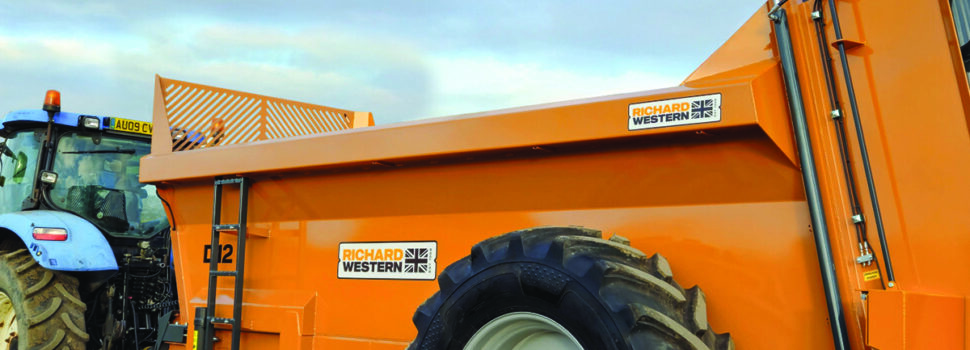
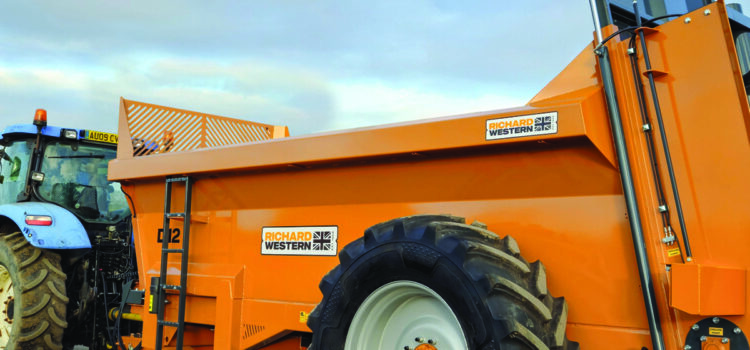
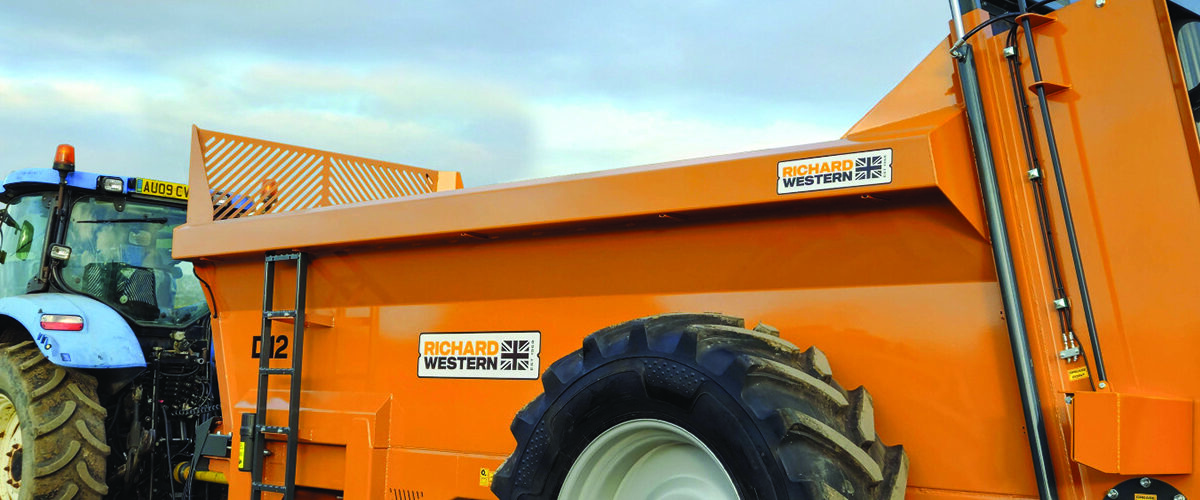
“Well-engineered design in key muck spreader features such as the rotors, bed and body can help ensure loads are spread quickly and evenly,” says Angus Western of Suffolk-based manufacturer Richard Western.
Farmers also face practical constraints. Regulations require manure to be covered during transport. Handling characteristics differ from fertiliser and can complicate logistics and application.
Despite these challenges, the direction of travel is clear. And the shift to manure reflects a broader move towards system-based agronomy, where soil condition and nutrient cycling play a larger role in farm performance and profitability.