

B amford has become Britain’s best-selling winter wheat – less than three years
after joining the AHDB Recommended List.
The achievement marks the first time since Robigus in 2005 that a Group 3 soft wheat has taken the top spot.
Bamford accounted for more than 14 per cent of commercial seed sales for 2025, according to Hutchinsons – against what is described as a competitive line-up of other varieties.
The speed of Bamford’s rise in a market long dominated by hard Group 4 feed wheats reflects a wider shift as farmers look for varieties capable of combining strong feed yields with access to premium distilling, export and biscuit markets.
For merchants and processors, Bamford also arrives at a time when supply chains are seeking more consistent quality wheat with stronger sustainability credentials and broader market flexibility.
Market momentum
Bamford’s appeal lies in its ability to deliver across multiple fronts, says Hutchinsons national seed manager David Bouch. The variety has performed consistently since it burst onto the scene, he adds.
“With three end markets and a yield still rivalling the best hard Group 4 feed wheats, it’s not hard to understand why Bamford has been on a continuous upward curve,” says Mr Bouch.
“For any variety to become a market leader it, has to perform consistently well from Day One – and Bamford has done that since I first observed it in 2022.”
That consistency has proved important during a volatile period for UK arable growers. The past three seasons have included two exceptionally dry years – and one dominated by relentless rainfall.
Disease management remains critical but many growers have handled the risk effectively. Even last season’s concerns over weakening yellow rust resistance in some wheats failed to significantly dent confidence.
“Bamford was judged as being safer than many other popular varieties. I didn’t see much yellow rust in the crops I inspected last year, and, as of late April, I’m not hearing anything of significance on its yellow rust levels this season either.”
The variety still has untapped potential if weather conditions improve, says Mr Bouch. “Have we seen the best of Bamford yet in terms of its yield performances? Based on a broad assessment of the last three seasons, I’m tempted to say no.”
Mr Bouch says Bamford has already proven itself across differing soil types and growing regions. And while competition from newer varieties will intensify, he expects it to remain the dominant Group 3 soft wheat for the foreseeable future.
“On treated yield, it competes favourably against other popular Group 4 feed varieties – and, importantly, it possesses both a higher untreated yield and far superior end market potential than all of them.”
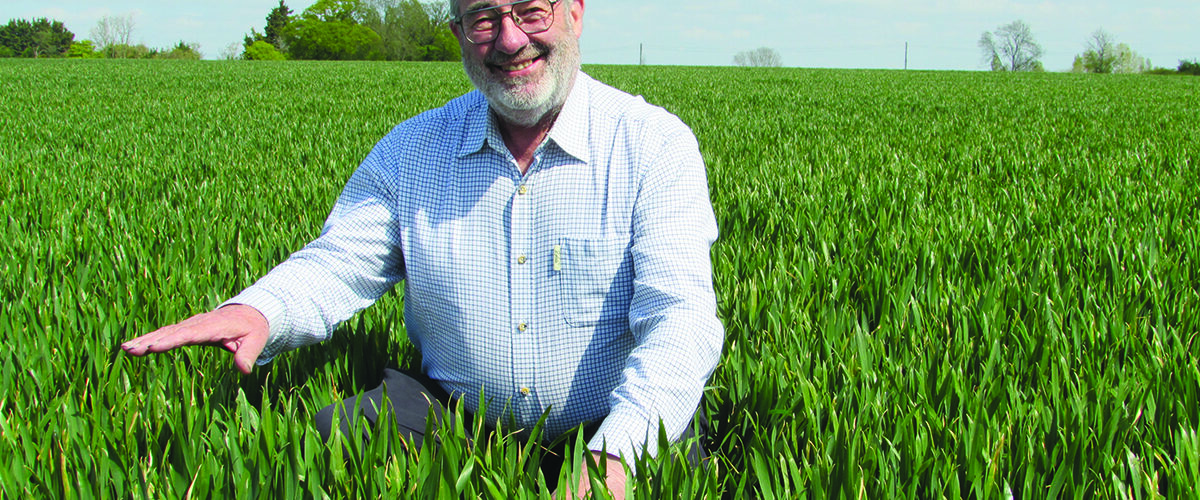
Suffolk farmer and machinery manufacturer Jeff Claydon farms some 380ha near Wickhambrook, in what is a “very dry part” of the county. He began growing Bamford after seeing the variety in Elsoms trial plots during 2023.
The business moved away from oilseed rape following cabbage stem flea beetle pressure and changes linked to the Sustainable Farming Incentive. It now operates a simplified rotation centred on spring oats and winter wheat.
“Beyond low annual rainfall, heavy land and long term issues from our historically narrow wheat / rape rotation, our most significant opponent has always been blackgrass,” says Mr Claydon.
Improvements in drilling systems and a greater focus on rotational management have helped restore weed control. A subsequent switch to spring oats has also made a massive improvement to the rotation. The farm has increasingly focused on soft wheats capable of delivering premiums alongside agronomic resilience. Mr Claydon says he opted to grow Bamford after seeing it perform well in three separate trials.
The first commercial crop covered 240ha. “Having heard about its tremendous early vigour, ability to suppress grass weeds and wide marketability, it really became a case of when rather than if we grew it.”
The result exceeded previous wheats grown under similar conditions. Despite delayed drilling during autumn 2024 and just 60mm of rain between April and August, Bamford still delivered average yields of 9t/ha. Mr Claydon says grain quality and competitiveness remain Bamford’s key strengths. “In the first season we grew it, there were no rejections from any of the homes it went to – everything made specification.”
Although Bamford has a solid disease package, Mr Claydon says its stand-out traits are its competitiveness and grain quality. The current crop looks “strong and exceptionally clean” after inter-row hoeing and a four-spray fungicide programme.
“We’ve always used a 4-spray fungicide program – applying both a T0 and T1, with a ‘safety-first’ approach to controlling both rust and, more importantly, septoria.”
Like Mr Bouch, Mr Claydon believes the variety’s best yields may still lie ahead.
“Hopefully this season we’ll receive a bit more rain through late spring and summer and see an 11-12t/ha yield that I believe the variety fully merits.”
Disease pressure
Farmacy agronomist Tom Smith advises six growers cultivating almost 500ha of Bamford across Essex and Suffolk. The variety’s popularity reflects a combination of agronomic performance and market opportunity, he says.
“With many of Jeff’s fields carrying blackgrass, good seedbed preparation with use of glyphosate based products such as Azural followed by tactical use of Avadex post-drilling is key to ensuring winter wheat crops get away well.”
Mr Smith says Mr Claydon’s system combines direct drilling, rotational planning and intensive fungicide protection to reduce risk.”
Forward-thinking
“He’s also a forward-thinking, risk-adverse arable farmer who has successfully utilised the benefits of direct drilling and a four-spray fungicide program for many years now.”
That management philosophy aligns closely with Bamford’s characteristics, he says.
“I can see the link with his choice of Bamford in terms of its high yield potential, wide marketability, high specific weight and consistent grain quality.”
Mr Smith believes Bamford’s rise has helped rebalance a wheat market that had become overly focused on hard feed wheats.
“There’s a strong argument that Bamford’s rapid market growth as a soft wheat has definitely helped to rebalance a grain market that had become very hard wheat centric.”
Frontier Agriculture technical manager Kirsty Richards says Bamford arrived at the right moment for the soft wheat sector. The Group 3 category had “completely stagnated” before Bamford’s arrival.
“The offer of distilling, soft biscuit and export giving growers multiple opportunities to achieve a premium with the fall back of also being a high yielding feed wheat ensured Bamford’s success.”
The variety quickly gained support from Frontier Agriculture and Pladis, owner of McVitie’s and other biscuit brands. It did so through the Back to Farm programme, which focuses on soil health and supply chains.
By harvest 2025, the programme supplied 36,000t of grain to Pladis — enough to produce 50m packets of biscuits. Bamford now forms a central part of the wheat tonnage supplied into the scheme.
“With continued interest in high-quality Soft wheat from partners such as Pladis, and, provided that Bamford continues to deliver on yield, disease resistance and grain quality, it certainly has the right credentials for market longevity.””
Broader change
Bamford’s rapid rise signals a broader change in the economics of UK wheat production. For processors and grain buyers, the appeal lies in supply consistency and grain quality.
For growers squeezed by volatile weather, rising input costs and tighter margins, varieties capable of securing multiple premium opportunities are becoming increasingly attractive.
Whether Bamford retains its position as Britain’s top-selling winter wheat remains uncertain as new candidates emerge. But after only two commercial seasons, few in the trade believe its growth story has yet run its course.