

 Two companies behind a new crop nutrition programme say it is delivering strong results for growers across a range of arable enterprises.
Cope Nutrition was launched by Lincolnshire-based seed and grain specialist Cope in partnership with crop nutrition specialists BioNature. It aims to help growers achieve higher, more resilient yields.
The programme is delivering results across a range of crops and farming systems, says Cope seed production manager Tom Siswick. It is helping growers increase output while reducing inputs, he adds.
“The data shows significant yield gains, stronger crops and more efficient nitrogen use. It’s a practical, evidence-backed solution for growers looking to build resilience and profitability into their system.”
Trial farms
Wheat yields increased by an average of 0.47 t/ha across eight trial farms using the nutrition programme during the 2025 drought, explains Mr Siswick.
The highest-yielding wheat plot delivered an additional 1.5 t/ha, with consistent gains also recorded in barley and oilseed rape. Winter barley delivered the strongest response, with yield increases of up to 39% in some trial blocks.
Crops grown using the programme have achieved world records in wheat, barley, oats, potatoes, sugar beet and oilseed rape, recognised through multiple Yield Enhancement Network Gold Awards.
Lincolnshire farmer Tim Lamyman achieved an oilseed rape yield of 7.71t/ha; John Anderson achieved a spring oat delivered a yield of 10.9 t/ha; and Mark Popplewell secured a winter barley yield of 12.62 t/ha.
“We started using the nutrition programme just over six years ago,” says Mr Popplewell. “We now use it across the whole of our 2000ha farm, covering winter wheat, winter barley, spring barley, record breaking Merlin spring oats, and spring beans.”
Nutrient efficiency
One of the programme’s strengths is its ability to improve nutrient efficiency. Trial data suggests nitrogen-use efficiency (NUE) is up to 38% higher – with 27% less nitrogen required per tonne of grain produced.
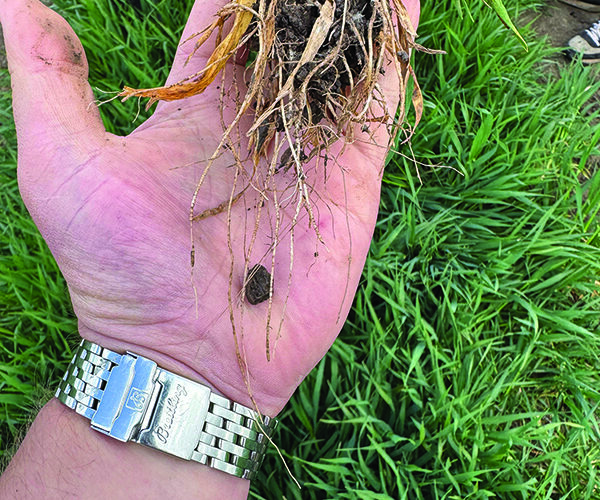
Growers report crops with stronger, deeper root systems; better drought and stress tolerance; more even, uniform growth and better grain fill – helping crops maintain performance when untreated areas struggle.
Results from the 2025 potato trials at Dyson Farming Research show a clear yield and value advantage from the Cope Nutrition programme compared with a standard management programme.
A trial crop of potato variety Elland saw yield increase from 65.85t to 87.13t/ha, a gain of 21.28 tonnes (32.3%). Meanwhile, Caledonian Rose increased from 31.7t to 45.9t/ha, a gain of 14.2t/ha (44.8%).
This performance is linked to stronger plant and root growth, enhanced nutrient uptake and tuber bulking, reduced calcium-related disorders, and more uniform tuber size and improved skin finish – all key for processing and premium markets.