

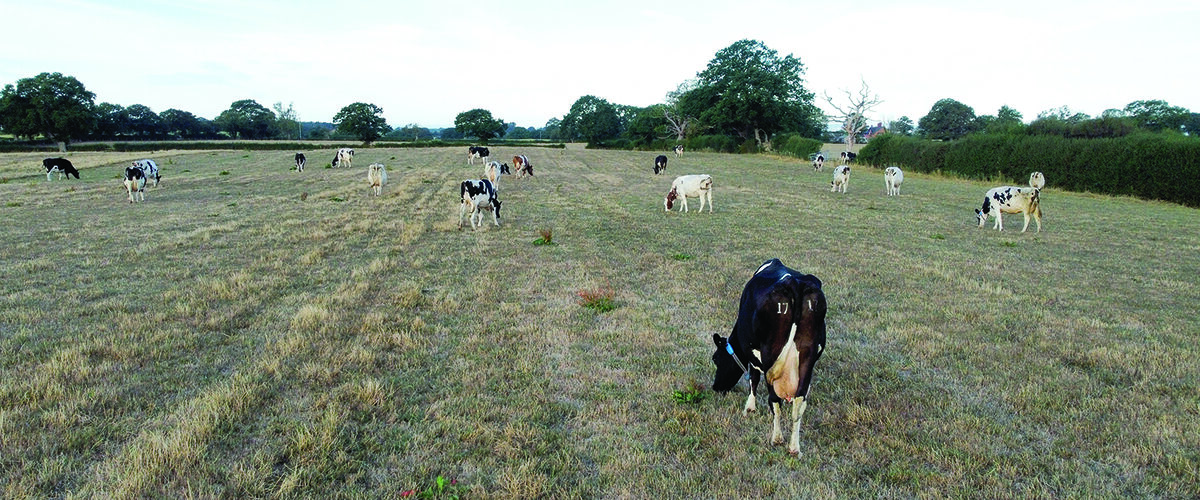
Beef and dairy farmers should resist grazing drought-hit grassland as soon as rain returns to preserve parched swards.
Instead, farmers should consider keeping cows in condition by feeding conserved winter forage. Allowing recovering plants to reach the three-leaf stage before livestock return could protect weakened swards and extend autumn grazing.
Much of the UK entered summer with reasonable silage and hay reserves after favourable early-season conditions. But prolonged drought and high temperatures hit grass growth hard, says James White, of grass specialists Barenbrug.
Recovery first
“Despite the recent spell of hot and dry weather, the majority of livestock farms in the UK have access to decent crops of silage and hay which were safely gathered into sheds and silos during the favourable conditions at the start of summer.”
The key management decisions will come when sufficient rain finally arrives. Mr White says farmers should resist the temptation to turn livestock onto fresh growth immediately. Weakened plants will need time to rebuild their reserves, he adds.
“Grazing too hard, too soon will be counterproductive, with future regrowth stunted resulting in less forage available later in the season.” Where grazing is particularly scarce, farmers could deliberately sacrifice selected fields while giving the remainder of the grazing platform longer to recover, says Mr White. “Forfeiting a handful of fields by grazing them hard so that the remainder of the grazing platform has longer to recover could be the best option where swards have been under severe drought stress.”
Sacrificed or damaged fields can be prioritised for reseeding or overseeding. Farmers should identify those with poor plant populations, weed problems or older, less productive leys.
Warm soils should encourage rapid establishment, but sufficient moisture is essential. “But don’t be tempted to reseed too soon,” says Mr White. “Wait until adequate soil moisture is available.”
Feed pressure
Farms already using conserved forage should reassess stocks before housing. An extended autumn grazing season would ease that pressure – but relying on favourable weather remains risky. Some established swards may recover once moisture returns without expensive renovation. Others will justify reseeding, says Mr White.
After a summer dominated by scarce grass, waiting will be difficult. But allowing plants to recover before grazing could ultimately provide more forage and help protect valuable winter feed reserves.