

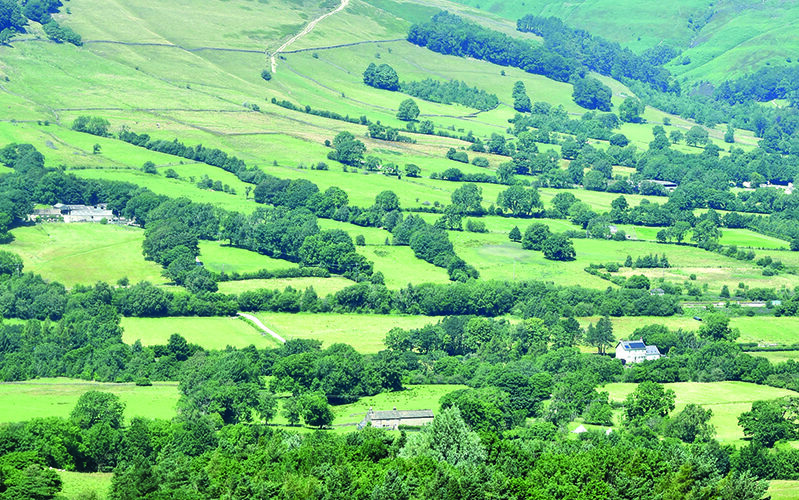
 A Derbyshire farmer is reshaping a traditional hill system to bring livestock, landscape and business together at the foot of Mam Tor.
Third-generation farmer at Hardenclough Farm, James Metcalfe, not only has to contend with high altitude land which rises to 2,000ft above sea level, but also farming in public view at the foot of one of the Peak District’s busiest landmarks. And whether it is farming in harmony with nature or ensuring he is making proactive decisions about the role his animals play in the wider landscape, James is keen on effective partnerships and works closely with his vet to ensure his animals are fit, healthy and working in tandem with the environment.
“For me, the key thing is to make farming work alongside the environment; you’ve got to do both things together,” says James, who has won the VetPartners Sustainable Farming Environmental Impact Award 2026.
The farm seems to exist within its own climate, he adds, with north-facing slopes, known as the ‘Cold Side’ on the Ordnance Survey map, remaining in shade while the opposite hill is green and sunlit.
“Farming in this landscape is challenging, sure, but it’s also a privilege and really worth it.”
A harsh landscape requires careful livestock selection, and James believes making breed changes has been key to his farming success.
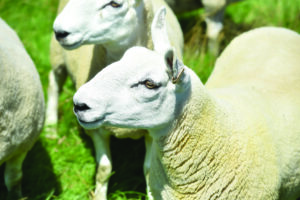
“We’re carrying the same volume of stock, but we’ve reduced the size of sheep from Swaledales and Mules, to North Country Cheviots,” he explains. “The Cheviots don’t eat as much or take as much looking after in terms of additional bought-in feed, so they suit the landscape better and cost me less. I think this is one of the biggest things we’ve done for the environment: reducing the impact on the land without affecting farm productivity.”
Conservation grazing
James believes if you are going to farm with the environment, it has to stack up financially. An example is where Galloway bullocks used for conservation grazing have been replaced by a herd of pedigree Luing cows because they can provide the grazing action the habitat needs, while also producing saleable calves.
Hardenclough’s hill ground is divided by a road into two roughly 100-acre blocks, known as ‘top hill’ and ‘bottom hill’. Previously, sheep grazed both hills for most of the year, sharing one with the cattle. James now allows the cattle to graze ‘top hill’ alone for six months, before the sheep return after weaning.
He says: “Instead of having sheep on it for 10 months, that hill now has them for just two. Reducing the grazing pressure means the plants have a better chance to flower and seed. In the past four years the grazing quality on top hill has improved, so it’s making a difference.”
James also stopped using chemical fertiliser when prices surged at the start of the Russia-Ukraine war and switched to using muck from housed cattle and finishing lambs instead.
Nothing is blanket-sprayed, either. James treats problem thistles individually with a knapsack and spot sprayer, continuing what is a three-generation practice, and uses the slower process to inspect sheep at the same time.
He says: “I would describe a lot of what I do as quite an old-fashioned way of farming, taking my time to do things manually. It can seem laborious, but I see it as beneficial.”
Next steps
Under a new Landscape Recovery scheme across the National Trust’s High Peak estate, which comes into effect in the next year, Hardenclough will be making ongoing improvements such as altering livestock numbers grazing the land, restoring hedges, planting new trees and improving manure storage.
James notes that tree canopy cover on his land is already around 18%, close to the 20% target within the scheme, and he’s keen to use every new strip of trees to solve practical and environmental challenges.
“I’m happy to have more trees, but where they go needs to make sense for both the farm and the environment,” he says. “We can put a strip of trees up so the neighbour’s bull can’t see my cows, for example, and plant more along the riverbank to help stabilise erosion. We have a small herd of roe deer that comes through the farm, which I love seeing, and more trees will continue the corridor they use to get around too.”
More than farming
James has embraced the volume of passing visitors, inviting conversations and encouraging school and community visits, hosting lambing sessions and Open Farm Sunday.
He says: “Passers-by will chat for hours at the yard gate about what we do and why. Many ask where they can buy our meat because they want that traceability. We have to lamb indoors as the volume of people and dogs makes it impossible otherwise, but we like to invite schools and other groups to come and see what we’re doing in the sheds.”
James also hopes to make Hardenclough a centre of excellence for farming with nature and has plans for a farm classroom to support this.
“Farming can be quite insular,” he says. “How can we expect people to understand what we do without telling them? I’ve wanted to farm sheep since I was five and now, I get to do that and work with nature at the same time. What could be better than sharing that with people?”
Sustainable farming award winner
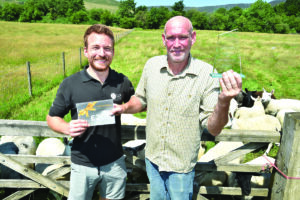 Mark Marcello (left) from Farm Vets Derbyshire nominated James for the VetPartners Sustainable Farming Environmental Impact Award. The accolade recognises farmers who are leading the way in biodiversity, emissions reduction, regenerative agriculture or sustainable land management.
Mark says: “James has worked alongside the National Trust and Natural England for the past 20 years to manage land with agroecological sustainability goals in mind, resulting in a significant increase in biodiversity in key areas. He’s also made changes to improve how the livestock system can work with nature and has managed to increase flock and herd productivity at the same time. It’s encouraging to see James’ enthusiasm for farming with nature paying off.”