

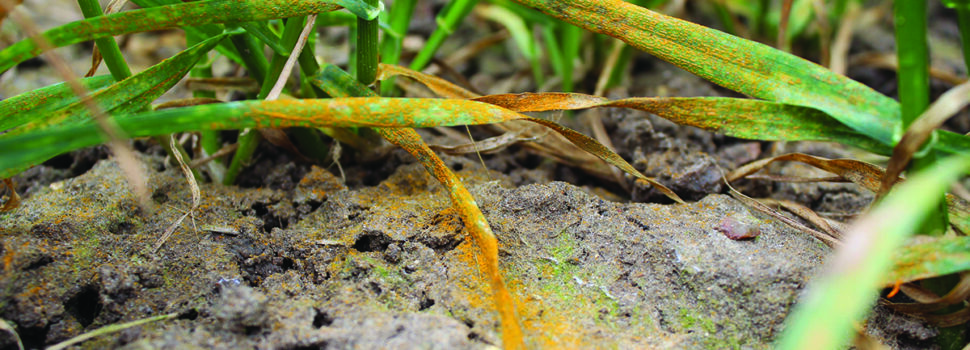
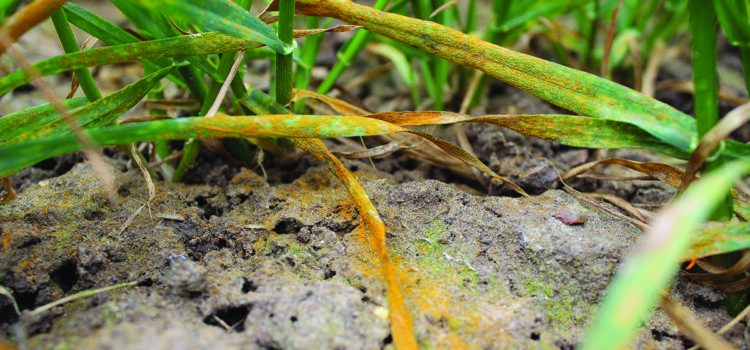
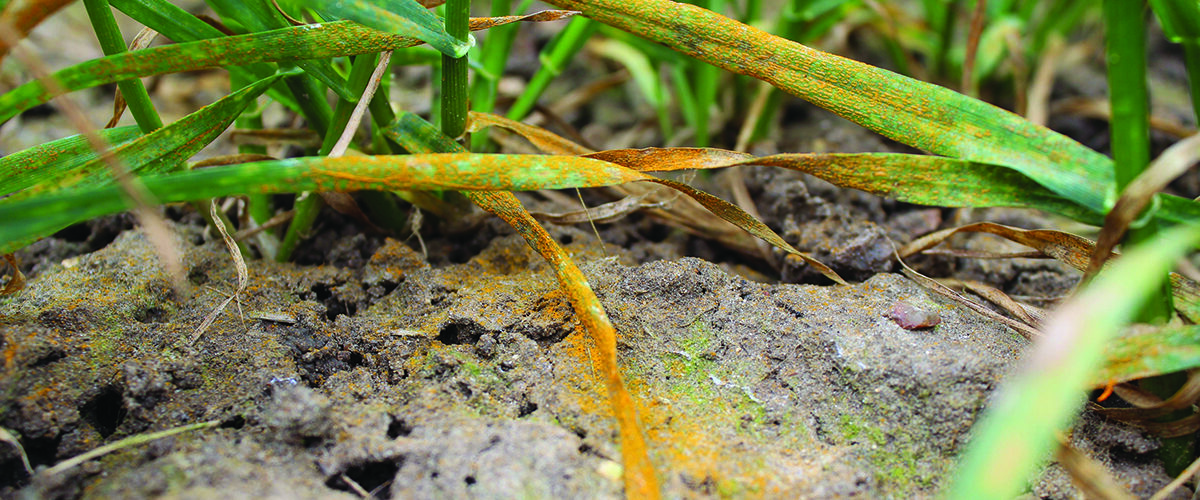
 Wheat breeders are deploying new genetic techniques to tackle rising pressure from yellow rust, as resistance in widely grown varieties begins to fail.
An estimated 40% of the UK wheat area is now planted with varieties highly susceptible to the disease. The shift follows the breakdown of the Yr15 resistance gene, which had provided protection for more than a decade.
The change has exposed a structural weakness in varietal resistance. It has also accelerated efforts by breeders to identify and deploy new sources of protection.
Resistance reset
“The Yr15 gene was surprisingly long lived,” says David Schafer, senior wheat breeder at RAGT.
“It has lasted for over ten years in varieties with a large market share. This forms part of the reason why we have found ourselves in a situation with such a large percentage of the wheat area exposed.
“However, when there is a breakdown, as we have seen with Yr15, the market reacts quickly. You can already see these selections in a wave of new candidates for the RL this year that breeders, including RAGT, have put forward.”
Breeders are now focusing on diversifying resistance. Programmes are drawing on global genetic pools and testing lines across a range of environments. The aim is to reduce reliance on single major genes that fail rapidly under pathogen pressure.
At the same time, advances in marker-assisted selection are allowing breeders to identify and combine multiple resistance traits more efficiently.
Stacking the odds
The strategy centres on stacking different resistance genes within a single variety. This approach aims to deliver more durable protection against evolving rust strains.
RAGT says its programme already draws on a wide range of resistance mechanisms. One example is the variety RGT Hexton, which carries a strong yellow rust rating despite not relying on the Yr15 gene.
“Taking one step back from that, we are constantly looking for new resistance genes and novel resistance mechanisms. It is a breeding company’s job to develop these, ready respond to market needs,” says David Schafer.
“We are also looking to breed durable resistance by stacking and combining different resistance sources. We aim for at least two different sources of yellow rust resistance in the varieties we develop, using RAGT’s strong capabilities in marker assisted selection.”
Resistance scores alone do not tell the full story, adds Mr Schafer. Some growers assume that varieties with the highest ratings carry a greater risk of sudden breakdown. But that is not always the case.
“Large effect resistance mechanisms like Yr15 can mask the presence or absence of underlying smaller effects,” he says. “Through our breeding efforts and field testing, we can identify combinations of genes that are complementary and better than how the parents perform.”
The implication for growers is clear. A mix of varieties with different resistance backgrounds may offer more resilience than reliance on a single high-scoring option.
“Rather than looking at each individual variety, it is better for a farmer to have a diverse range of resistances from the different varieties they are growing on their farm,” he says.
Farm-level decisions
The impact of resistance breakdown is already shaping decisions on farm. In eastern England, grower Frank Stennett has adjusted his variety choice in response.
Mr Stennett farms across multiple sites in Norfolk and Suffolk. This season, he selected a newer variety for one of his farms, citing its stronger disease profile.
“When you looked at the hard feed wheat varieties on last year’s RL, while they might provide fantastic yields, virtually all of their scores for yellow rust resistance had dropped to fours,” he says.
The chosen variety offers a higher yellow rust rating, alongside moderate septoria resistance and protection against orange wheat blossom midge. Despite that, he plans to maintain a full fungicide programme across his 50ha crop.
Input costs are also shaping management decisions. A recent rise in fertiliser prices has forced a reduction in nitrogen application rates.
“That’s not quite the same for fertiliser, where the sudden price increase off the back of the Iran conflict, means he’s now planning to apply around 185-190kg/ha of nitrogen rather than pushing it to 210-220kg/ha of N.”
The lower rate is likely to limit yield potential. Output may fall short of the 10t/ha target achievable under a full nitrogen programme. Even so, the crop still offers some margin support through a modest premium on part of the harvest.