

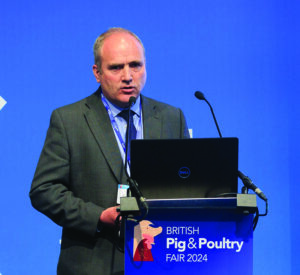
A bumper line-up of speakers has been confirmed for this month’s Pig and Poultry Fair, which takes place on 13-14 May at the NEC, Birmingham.
Key issues addressed by speakers from across the supply chain will help to give producers the confidence to invest their businesses – with a positive outlook for the pork, poultry and egg sectors, say organisers.
Pig forum
The Pig Outlook forum will be chaired by Charlotte Evans, account manager at feed suppliers and nutrition experts ABN. The mood at the two-day industry showcase will be cautiously optimistic, suggests Dr Evans.
“People will be pleased with some of the commitments we’ve seen from retailers in terms of sourcing British pigmeat. But there are still a couple of things holding people back from investing.”
One example is changing animal welfare legislation – like potentially phased out farrowing crates – following the publication of the government’s animal welfare strategy for England last December.
“Producers are going to be looking to really understand what consumers will pay for and what retailers are wanting from the supply chain before they can have the confidence to invest and grow their businesses.”
Poultry meat
It’s a similar story in the poultry meat sector: Chicken remains immensely popular in the UK, but efforts to improve bird welfare and the environment are threatening the nation’s ability to meet consumer demand.
Open discussions around the trade-offs between welfare, efficiencies and price – as well as planning policies – are therefore essential if producers are to have the confidence to invest.
“Welfare and sustainability are two areas that are always changing the market,” notes Ralph Bishop, poultry nutrition and innovation manager at Premier Nutrition.
“And recent commitments to reduce stocking densities or move to slower growing breeds are causing great concern over our ability to meet demand and compete against imports.”
If farmers must reduce stocking rates, they therefore require more space if they are to produce the same amount of chicken – but planning and environmental restrictions mean this is hugely challenging, says Mr Bishop.
“Preference for British chicken is very strong on retail shelves, but the industry is very nervous about imports increasing if we can’t meet demand ourselves.”
Egg sector
The same is true of the egg sector, and producers will be keen to hear the outcome of two recent government consultations, says Gary Ford, head of strategy and producer engagement at the British Free Range Egg Producers Association.
British producers largely oppose the proposed UK ban on colony cages from 2032, on the grounds that consumers need an affordable, entry-level choice. “If there is a ban then there needs to be a reciprocal ban on egg imports from cage systems.”
Free-range producers are particularly concerned about the impact on the egg market, he adds. “Free-range is a premium product – if we lose colony eggs, will they still command a premium?”
Clearly, if colony systems are phased out, while consumer demand for eggs continues to grow – at about 5% a year – then more free-range and barn units will be required – or imports will fill the space.
And that’s where the second consultation comes into play, looking at planning policy reform. Although it mostly focused on residential housing, there were questions in the consultation around agricultural development.
“It recognised the benefits of development for domestic food production, animal welfare and the environment, alongside an ambition to ‘strengthen support for various types of agricultural development and diversification’.
“That is hugely encouraging, and will be beneficial for all farm sectors, not just eggs,” says Mr Ford. “Anyone making planning applications can reference that direction of travel as a measure of support.”
The British Pig and Poultry Fair is free to attend. For full details and to register for your FREE ticket, visit pigandpoultry.org.uk.