

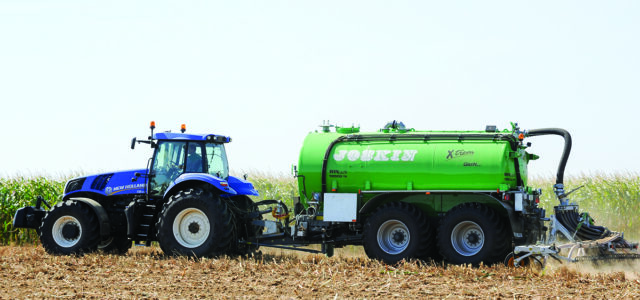
Tighter controls on sewage sludge spreading will improve water quality and reduce river pollution, says the government.
Some 41% of England’s rivers, lakes and streams are currently affected by agricultural pollution, says the government. If approved, the new rules will increase oversight on sewage sludge spreading on farmland.
Options include bringing sewage sludge spreading under the government’s Environmental Permitting Regulations. Defra says this will protect human health and the environment from harmful contaminants.
At the same time, it says existing agricultural water rules will be simplified, cutting unnecessary duplication and complexity and making it easier for farmers to understand and follow the rules.
Major overhaul
The measures form part of Defra’s Environmental Improvement Plan, reducing ammonia emissions from farming; and the Water White Paper – an overhaul of how England’s water system is regulated and managed.
Water minister Emma Hardy and farm minister Angela Eagle set out the plans at a roundtable meeting with key farming, water and environmental stakeholders as part of the government’s plan to transform Britain’s water system.
Ms Hardy said she wanted to work with farmers on water pollution. “By setting clearer guidelines and providing better support, we’re making it simpler for farmers to meet standards, farm sustainably and protect our environment.”
Funding to double the number of advice-led inspections has already been introduced. It means there will be at least 6,000 inspections a year by 2029.
Supporting farmers
Environment Agency director Jennie Donovan said her preferred option was to move sludge spreading into environmental permitting regulations. And she pledged to work closely with farmers to support regulatory reform.
“Our aim is to ensure that sewage sludge can be recycled to agricultural land in a safe and sustainable way. We will continue to work closely with the water industry, farmers and partner organisations to support this regulatory reform.”
A simplified, clearer regulatory approach alongside support schemes, grants and advice programmes would help farm businesses reduce pollution, protect water and strengthen their long-term resilience, said Ms Donovan.
The changes build on a ministerial roundtable last summer, where the government established the Addressing Pollution from Agriculture programme, working with farming and environmental stakeholders to drive reform of agricultural water regulations.
Livestock numbers
Responding to the announcement, Soil Association policy director Brendan Costelloe said there needed to be lower thresholds for intensive pig and poultry production – effectively limiting livestock numbers.
Mr Costelloe said: “There is undoubtedly scope to simplify aspects of the regulations that are intended to protect our rivers from agricultural pollution – but the focus needs to be on making them effective.”
“This means lower permitting thresholds for intensive pig and poultry production, which has wreaked so much havoc on our environment, and introducing permitting for intensive cattle and dairy production.”
Stronger controls on sewage sludge spreading were welcome – but better treatment and monitoring was also needed so the benefits of sludge were realised without any of the unwanted side-effects.
“It should be able to play a key role in delivering a more circular economy with less waste. But in practice it’s full of nasty microplastics and PFAS that are contaminating our soils.”