

‘Key milestone’ for digital passports
Arable 25/03/2025
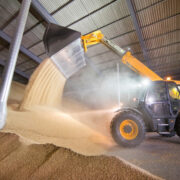
• Industry agrees on way forward • Goal is a more efficient system • Next steps include funding talks Digital passports are another step closer for cereal crops after the NFU said its concerns had been addressed. Due to replicate the existing paper system, the digital passport will enable... Read more

A farming family whose roots stretch from India to Worcestershire starred on the big screen after creating a documentary mini-series. ‘It’s a Punjabi Farm Innit’ follows the journey of the Makhan Singh Padda family from the Punjab to Vicarage Nurseries, in Bretforton, in the Vale... Read more

• Treasury refuses to listen to farmers • Government ‘no interest’ in moving • Leaders propose compromise tax Industry leaders have pledged to fight on after the Treasury again refused to back down on plans to impose inheritance tax in farmers. It came after Treasury minister James Murray summoned... Read more

The government’s latest move in the battle over inheritance tax has rightly angered farmers and farming families. Summoning industry leaders from across the UK to attend top level talks in London raised hopes of a Treasury compromise on plans to impose inheritance tax on farming assets worth more than... Read more

Mass rally celebrates 60 years of MF137
News 20/02/2025
More than 200 historic tractors came together for a mass rally at last month’s Newark Vintage Tractor and Heritage Show. Some 203 Massey Ferguson 135s – a model which sold more than any others in the series and remains in use across the world today – were showcased at... Read more

Guide to selecting the right work light
Machinery 20/02/2025
Selecting the appropriate lighting for farm workshop is crucial for efficiency, safety and getting the job done. Choosing the right work light means considering various factors – including brightness, power source and durability. To help farmers reach the right decision, JCB has published a comprehensive guide on the factors... Read more

• Up to £40,000 available for coming year • Biggest UK supplier for farm spare parts • 44 grants awarded from 400 applications Machinery and parts supplier Kramp has announced that its Cultivate a Generation grant scheme for farmers, agricultural engineers and students. Some £40,000 is being made available... Read more

Robbie Polson will be on hand to meet visitors at LAMMA following his recent promotion to commercial director at Opico. Mr Polson joined Opico as business development manager in 2022 – and has also spent time working at sister company Stocks Ag while being involved in a number of... Read more

Cultivation equipment set to woo visitors
LAMMA 20/02/2025
Family-run firm Grange Machinery will exhibit a number of new innovations at LAMMA 2025. Based in Holderness, East Yorkshire, the company manufactures agricultural machines and wearing parts that offer affordable solutions to farmers across the UK, Europe and as far as New Zealand, recently launching in Australia. The product... Read more

• Move away from standalone solutions • Automated systems require less labour • Efficiency and cost-effectiveness key Demand is growing among farmers for mobile grain dryers to be at the centre of new automated drying systems. “There is a move away from farmers using Mecmar dryers as a stand-alone... Read more


