

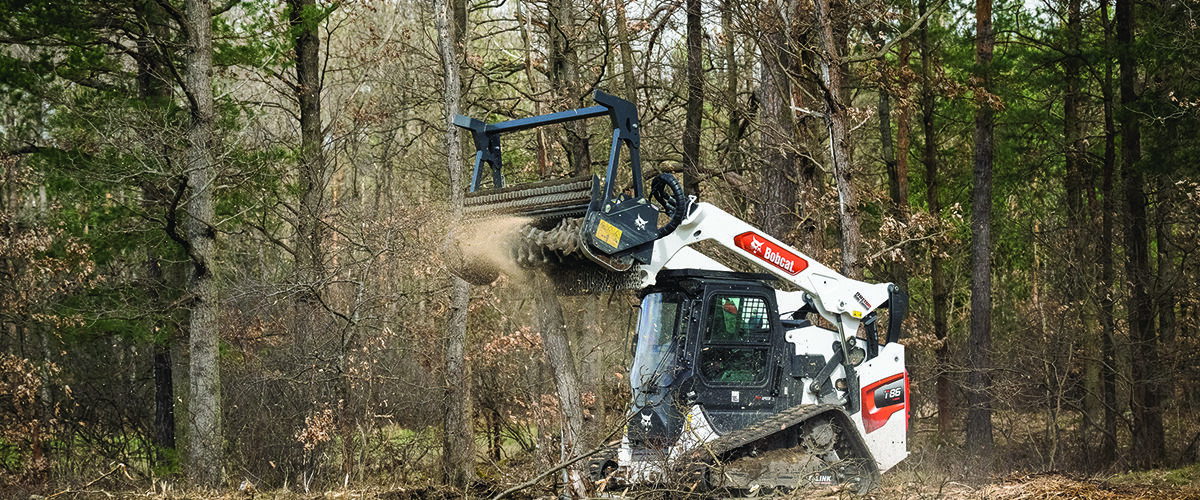
 Summer wildfires across the UK and Europe have sparked interest in mechanical vegetation clearance to reduce combustible material before fires start.
High-profile wildfires on Dunwich Heath on the Suffolk coast; Stourbridge in the West Midlands; and South Wales – as well as Spain and France – mean more land managers are looking to manage undergrowth and create firebreaks.
Fuel management
Mechanical clearing can reduce the amount of dry vegetation available to fuel a fire. Removing or shredding brush, branches and stumps can also break pathways that allow flames to spread.
Compact machinery has a particular role where larger forestry equipment cannot easily operate. Smaller loaders and excavators can work between trees, along tracks and close to buildings. The approach is increasingly relevant in southern Europe. Thousands of hectares were destroyed around Madrid and Bordeaux during the summer – underlining the potential cost of inadequate vegetation management.
Maintaining forest tracks is another priority because emergency crews need rapid access when fires occur. Mechanical clearance can keep existing routes open and create new access where required. Machinery can also establish reduced-vegetation strips around homes, infrastructure and rural settlements. Bobcat district manager for Iberia Carlos Campos said compact equipment could carry out several of these operations.
“Our machines are capable of the most demanding jobs, while remaining manoeuvrable enough for selective tree removal or brush clearing.”
Wider role
Attachments include forestry cutters, mulchers, stump grinders and tree cutters. Their usefulness depends on terrain, vegetation and the intensity of clearance required.
Excavators can extend mechanical management into ditches, slopes and other areas that are difficult to reach with conventional loaders. Hammer or blade mulchers mounted on excavator arms can remove shrubs and tall grass from neglected ground. Tracked loaders equipped with forestry cutters can tackle heavier vegetation.