

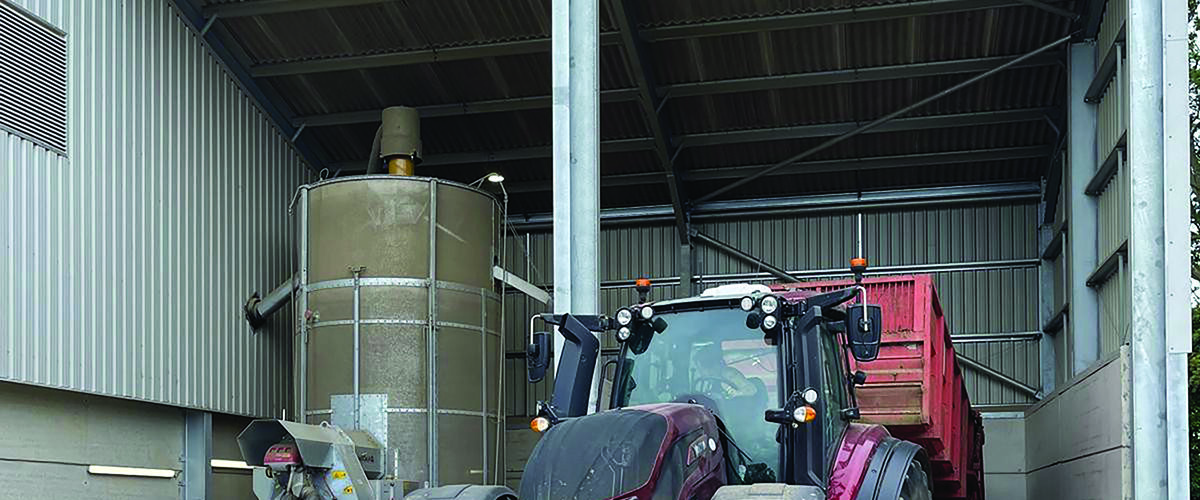
 An estate farm has invested in a fully automated grain drying and handling system to replace its ageing post-harvest infrastructure.
Farm manager Mark Heritage says his 1960s grain set-up could no longer cope with the scale and speed of modern harvest operations after bringing farmland back in-hand in 2022. Limited storage and lack of a grain dryer at Titch Hill Farm prompted the overhaul amid growing pressure as arable output expanded on the Sompting Estate near Worthing, West Sussex.
Wider trend
The investment reflects a wider trend across UK agriculture as farms modernise post-harvest systems to improve efficiency, reduce labour demands and increase flexibility during increasingly unpredictable harvest conditions.
“We were losing valuable harvesting time waiting for moisture to drop,” says Mr Heritage. “With more arable, we had outgrown the old system.”
Titch Hill Farm comprises 360ha of downland, including 190ha of arable crops such as winter wheat, winter barley, spring barley and oilseed rape alongside herbal leys. The previous storage system forced the business to move grain quickly to create space for incoming crops. If grain exceeded target moisture levels, harvesting had to stop.
Capacity
Ahead of harvest 2024, the farm constructed a new grain store before installing a larger intake and drying system to handle increased throughput with minimal manual input.
Mr Heritage first came across grain handling experts McArthur BDC after watching a YouTube video featuring contractor and farming influencer Olly Harrison discussing his Mecmar dryer.
Further discussions convinced him the company could deliver a broader operational solution rather than simply supply equipment. This included an integrated post-harvest system tailored to the site layout and expected crop volumes.
“The McArthur BDC team understood exactly what I was trying to achieve. When the plans came through, they matched what I had in mind,” says Mr Heritage.
At the centre of the installation is a D20t automatic electric mobile grain dryer from Mecmar, linked to a Skandia 40tph trench intake conveyor system. The design balances intake speed, drying capacity and discharge flow to avoid bottlenecks.
Installing the largest suitable drier within the available footprint was only part of the challenge. Intake capacity also had to feed the drier consistently without overwhelming storage infrastructure.
Automation
Reducing labour requirements during harvest was a major objective. The Mecmar drier operates through a touchscreen control system with remote monitoring capability via mobile devices or desktop computers.
“My partner Natalie works alongside me, and I wanted to be able to help remotely if needed – even if I was driving the combine,” says Mr Heritage. “Being able to monitor and control the drier from my iPad was a massive plus.”
Grain tipped into the trench intake is automatically conveyed into the drying system. Sensors regulate intake flow, burner activation and drying cycles, while built-in aspirators remove dust and chaff. Once the crop reaches target temperature, the system moves into cooling mode before integrated moisture sensors verify final grain moisture levels. Grain is then either discharged into store or retained for outloading.
The control system also records operational performance data, including fuel consumption, drying times and moisture trends. That information allows the farm to review harvest efficiency and assess long-term operating performance.
Reliability
Given the farm’s coastal location near Worthing, corrosion resistance was another factor behind the investment decision. The Mecmar’s galvanised construction offers protection against salt-laden air and long-term weather exposure.
McArthur BDC completed installation and commissioning ahead of harvest. Mr Heritage says he couldn’t have been happier. “Throughout the project, communication was excellent and the install team worked to a very high standard.”
The new system now allows the business to harvest crops, dry grain and manage storage independently of immediate haulage or marketing pressures, he adds.