

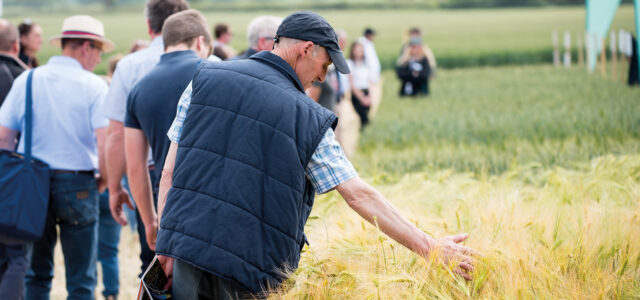
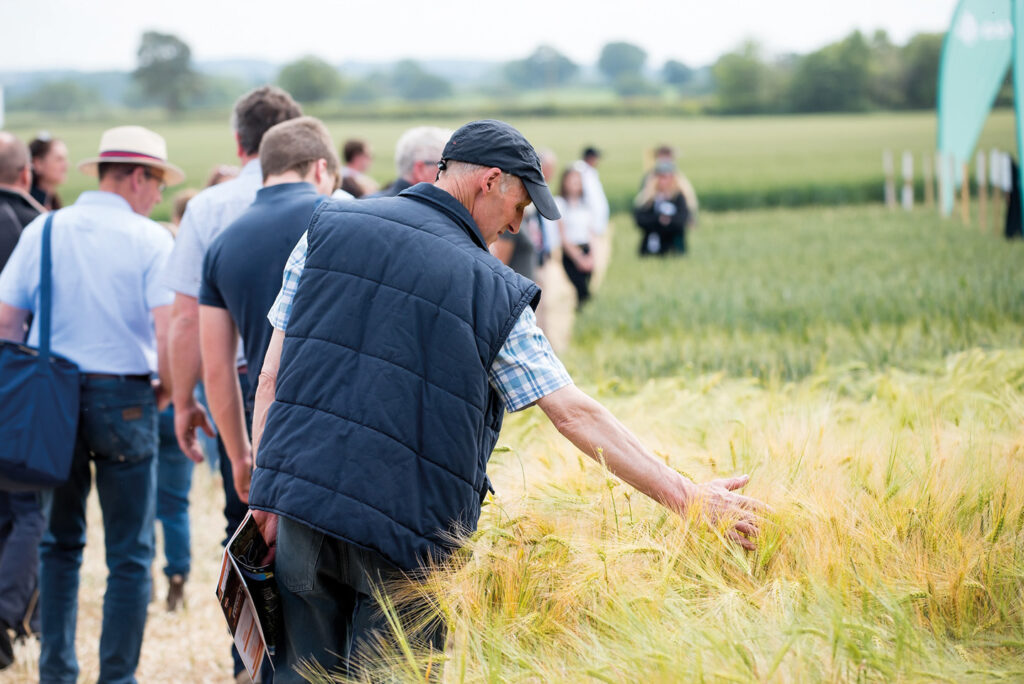
Farmers attending this year’s Arable Event will be able to see for themselves how crops perform under ‘real world’ conditions with a host of trial plots.
Crops on show in the trial plots reflect the reality of modern farming dealing with changing climate and last autumn’s incredibly wet weather, which meant drilling was delayed until 30 October, said Wynnstay seed sales manager Joe Wood.
“This is representative and means that farmers can assess a varieties suitability to our increasingly challenging autumn conditions, the plot tours are definitely one of the highlights of the Arable Event, attracting a huge amount of interest from farmers.”
The plots are looked after by Wynnstay’s arable department. This year, they include a comprehensive selection of leading barley and hybrid barley varieties, oats, triticale, hybrid rye and multiple top-performing wheat varieties.
Organised by Wynnstay and Grainlink, The Arable Event provides information to arable farmers ahead of the harvest and drilling season. As well as the trial plots, they will feature machinery demonstrations and informative and entertaining talks.
Plot tours hosted by industry specialists will give farmers a full and interactive overview of all market leading varieties, both new and old. Tickets are free and advance booking is recommended.
The Arable Event takes place on 18 June off Offoxey Road, Weston Under Lizard, which is part of Bradford Estates on the Shropshire/Staffordshire border. Guest speakers will include farming YouTuber Olly “Blogs” Harrison.
Other expert speakers include Roy Jackson and Claire Smith, both rural partners at WR Partners, Joe Lloyd from the rural research team at Savills and industry experts Gareth Jones from FMC and Mark Tripney from LKAB.
Free refreshments are included and
BASIS and NRoSO points are available to attendees. See www.thearableevent.co.uk
Farming ambassador goes back to school
A fourth-generation farmer headed back to his old school to talk to teenagers about county food production, the countryside and farming careers.
Beef farmer Oliver Surman, of Upton on Severn, spoke to a 240-strong group of teenagers at The Chase School, Malvern, on Tuesday (20 May) in his role as an NFU Farmers for Schools ambassador.
The NFU Worcestershire chair said it was strange being back at the secondary school where he was a pupil in the 1980s and 1990s but he enjoyed engaging the next generation about food production and careers in agriculture.
Students were also encouraged to visit a farm with their families on Open Farm Sunday (8 June) and to consider taster days at some of the colleges in the area to get a feel for agricultural and horticultural careers.
Better internet ‘key to farming future’
Almost one-in-ten farmers say they don’t have any internet, with 60% saying connectivity is crucial to running their farm.
The nationwide survey of UK farmers says bad or non-existent broadband connections are holding back the adoption of new technology on farms – including artificial intelligence and real-time monitoring capabilities.
Commissioned by CityFibre, the UK’s largest independent full fibre platform, the survey says access to full fibre broadband is encouraging the uptake of precision farming technologies with greater efficiency among the key benefits.
Meanwhile, 9-in-10 farmers admit to avoiding using the internet during busy times of the day, causing disruption to daily schedules, especially among family members who rely on the internet for other tasks, including education and hobbies.
The findings reinforce the importance of accelerating the rollout of full fibre internet in rural areas through government initiatives like Project Gigabit, which is delivering fast, reliable broadband to mostly rural.
Derbyshire dairy farmer John Chamberlain said he was relying on a 90-year-old copper line for broadband – but it was unreliable and his connection constantly went down, especially in bad weather.
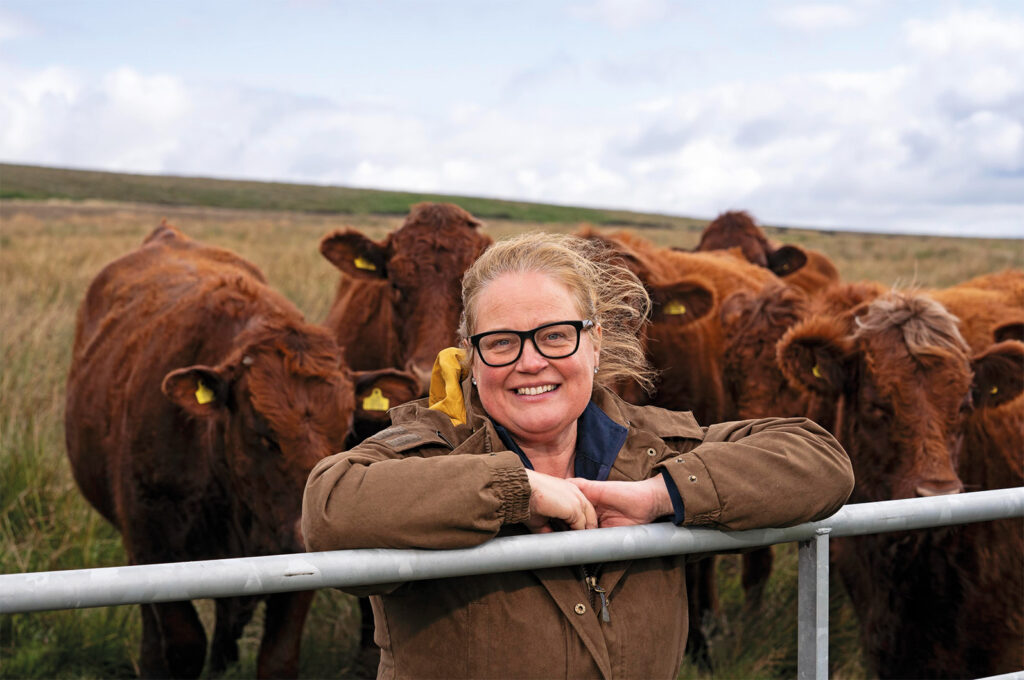
NFU vice president Rachel Hallos (above)said: “To confidently produce more home-grown food we need to be as efficient and productive as possible. Reliable internet and mobile access are key to achieving this.”