

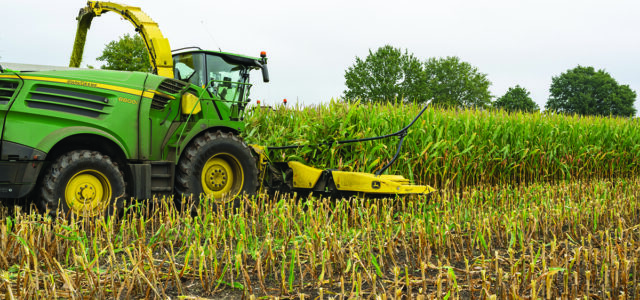
Plant breeders have changed the way the recommend forage maize varieties because climate change is making local growing conditions harder to forecast.
The British Society of Plant Breeders said it was replacing its site-based forage maize variety classifications with four maturity and performance lists for 2027 – aiming to give growers a clearer route through variety selection.
The move will see the BSPB drop the former favourable, very favourable and less favourable site categories. Instead, it is ranking varieties as first or second choice in short-mid or mid-long season groups.
The change, which follows a review, seeks to give farms a starting point based on required maturity and target harvest date, before they compare performance. The revised system draws on results from the full 13-site trial network.
New framework
“The new descriptive lists are designed to make variety selection more straightforward for growers, while ensuring the data behind them reflects performance across a wide range of UK growing conditions,” said Ellie Roberts, Niab forage crop specialist and BSPB maize trial coordinator.
The organisation reviewed its trial programme as increasingly variable seasons exposed the limits of assigning sites a fixed growing classification. Conditions can differ sharply between years, influencing trial outcomes. The updated analysis examines each variety across all conditions, rather than seeking to forecast its performance through a site label.
The lists contain a small overlap between the short-mid and mid-long groups. BSPB said this will help growers compare varieties around maturity boundaries. First choice and second choice varieties can then be assessed within the relevant group. The lists provide parameters including dry matter and ME yield per hectare, starch percentage and cell wall digestibility. They also score early vigour, standing power and eyespot resistance.
Ten new varieties join the 2027 Descriptive Lists. Short-mid season additions are KWS Giso, RGT Duxxford, LG Highlight, Katelego and KWS Marcopolo. The Mid-Long Season list gains DKC2644, Wesley, KWS Pluvio, Revelation and KWS Norento. KWS, RAGT, Limagrain, Bayer and Grainseed supply the new entries.
Among the mid-long entrants, DKC2644 and KWS Pluvio posted the highest dry matter yields, at 19.4 t DM/ha each. Their dry matter contents were 34.0% and 31.3% respectively. Katelego delivered the top ME yield of 222k MJ/ha and the highest starch content, 35.6%, at 35.1% dry matter.
KWS Giso led starch results among the new short-mid varieties at 39.2%, followed by RGT Duxxford at 36.3%. LG Highlight yielded 19.0 t/ha at 35.9% dry matter and produced 220k MJ/ha of ME yield.
BSPB said trial results point to longer-term breeding progress. Forage maize dry matter yields have risen by more than 2 t/ha in trials over the past decade. Starch content has increased by 2.7 per cent, while ME concentration has gained almost 0.5 MJ/kg.
“Breeding continues to deliver improvements in yield, starch and energy, while the trial programme is also challenging breeders to improve performance and nutrient use efficiency under increasingly variable growing conditions,” said Ms Roberts.
The descriptive list programme follows national variety list testing. Since the UK exited the EU, maize varieties sold in the country must be tested in UK conditions and accepted on the APHA national variety list.
Robust data
Niab and plant breeders carry out trial work under contract to BSPB. Entry requires at least two years of robust trial data from six English locations. Varieties must complete an additional year of descriptive list trials across 13 sites before publication.
Trials follow standard protocols, which are reviewed annually, and inspectors check compliance. NIAB independently verifies and analyses the data. A panel of farmers, breeders, nutritionists and agronomists reviews the list annually.
BSPB said the process provides independent evaluation to support forage systems in a changeable UK climate. Growers can identify a maturity band, set against their intended harvest date, then weigh output and crop traits.
The revised format is intended to make selection more direct in 2027. The full lists are available from BSPB and NIAB websites. They give growers the latest independent performance data for the coming growing season.
For businesses balancing forage requirements with variable conditions, the change shifts attention from broad site labels to comparable trial performance. It also keeps maturity at the centre of the buying decision.