

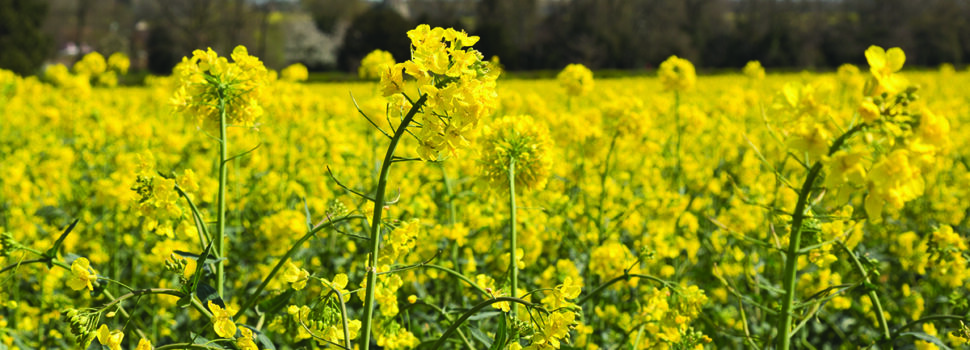
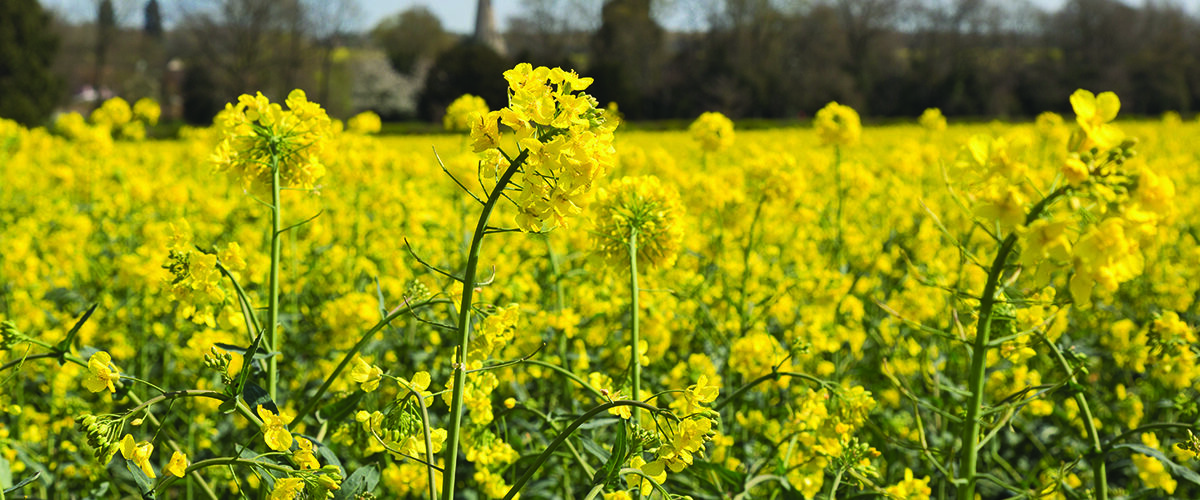
 Confidence is returning to oilseed rape with the crop set to be on of the star performers this year – both in terms of yields and margins.
After several difficult years, there is a noticeably different feeling around the crop. Across much of the country, more rape is back in the ground – with more farmers looking to grow the crop in the coming season too.
Stronger establishment conditions, lower cabbage stem flea beetle (CSFB) pressure and firm commodity prices have all contributed to a more optimistic outlook, says United Oilseeds Managing Director James Warner.
Industry commentators suggest UK OSR plantings are up by 20–30% this season, while 78% of crops were rated good or excellent in late May by the Agriculture and Horticulture Development Board.
“There are clearly more crops in the ground again and, importantly, more growers willing to consider oilseed rape as part of the rotation,” says Mr Warner. “After a number of challenging seasons, it feels as though the crop has started to turn a corner.”
Care needed
United Oilseeds believes that trend will continue into 2027. But Mr Warner is quick to stress that rebuilding UK oilseed rape production must be done carefully. “The challenge isn’t simply to grow more rape,” he explains.
“The challenge is to build the crop back to a sustainable level that meets UK demand while continuing to manage the risks. We have learnt a huge amount over the last decade and need to make sure that knowledge reaches farms.”
The need is clear. Defra’s Food Security Digest highlights oilseed rape and rapeseed oil as commodities at risk within the UK supply chain. Domestic production remains well below historical levels, leaving the UK increasingly reliant on imports.
Today, the UK imports more than half of the oilseed rape it consumes despite strong domestic demand and significant crushing capacity. Yet despite these challenges, growers across the country are demonstrating that rape can still succeed when risk is managed effectively.
Refusing to be beaten
Peterborough grower Bob Chapman is one of many growers determined to prove the crop still has a future.
Farming 1,200 acres of milling wheat, milling oats, malting barley and oilseed rape, Bob has adapted his management strategy to better cope with pressure from flea beetle.
Rather than chasing late August drilling dates, Mr Chapman now follows one of the key principles promoted through the industry’s 10 strategies for managing flea beetle in rape – including flexible sowing dates.
“I’m not prepared to be beaten by cabbage stem flea beetle – rape is too important in the rotation,” he says.
Waiting until peak migration has passed before drilling into September has helped reduce risk and improve establishment. This season’s 75ha of Maverick established evenly and built strong autumn biomass before carrying that momentum into spring. The hybrid’s vigour helped drive rapid early growth, giving the crop the best possible start.
Establishment
Attention to detail at establishment is equally important. Reflecting another key industry message – chasing perfection – Mr Chapman prioritises soil moisture conservation, seedbed quality and strong seed-to-soil contact. At the same time, cultivations are kept light and the crop is drilled immediately afterwards to minimise moisture loss before rolling consolidates the seedbed.
“It’s about getting the fundamentals right,” he explains.
His experience highlights an important lesson from the last decade. Successful rape rarely depends on one silver bullet. Instead, success comes from stacking multiple tactics together to improve the odds.
“It’s not one big change,” says Mr Chapman. “It’s doing a lot of little things right that gives the crop the best chance.”
His experience shows how multiple tactics can be stacked together to improve the odds. For other growers, the focus is equally on ensuring rape fits the wider farm business.
Rotation
Leicestershire grower Mark Hill has grown oilseed rape for more than 40 years.
A long-standing United Oilseeds member, Mr Hill experienced the worst of the CSFB years and lost several crops. Rather than abandoning OSR, however, he adapted.
“The gross margins are still attractive and it’s a wonderful break crop,” says Mr Hill. “It helps spread workloads and plays an important role in managing blackgrass.”
His approach is centred on reducing risk during establishment. Mr Hill says he uses conventional varieties and farm-saved seed where possible, growing PI Pinnacle in recent years and keeping establishment costs low. Should a crop fail, he has a clear exit strategy of peas and spring beans, limiting the financial impact.
“We try not to spend too much money up front,” he explains. “If we lose the crop, we’ve limited our exposure. Once it’s established and away from the threat of flea beetle, that’s when we’ll invest.”
High seed rates, organic manures and a little nitrogen down the spout encourage rapid early growth, while drilling typically takes place during the first week of September.
“It’s about having a system that works for you,” he says. With average yields of 3.8t/ha over many years, his experience demonstrates that rape can remain part of the rotation, provided growers are prepared to adapt.
One industry
That principle sits at the heart of the OSR Reboot campaign. Over the last two years, breeders, growers, agronomists, researchers, processors, policymakers and industry organisations have come together to address the challenges facing oilseed rape.
One of the most tangible outputs has been the publication of the campaign’s 10 Strategies for Managing CSFB in OSR.
“What makes the 10 strategies unique is that the entire industry is aligned behind them,” says Mr Warner. “It is quite rare to see competitors, researchers, breeders and farmer organisations all promoting exactly the same messages.”
The strategies encourage growers to stack multiple approaches together, including drilling to conditions rather than dates, prioritising establishment, using companion crops where appropriate, monitoring pest pressure, avoiding unnecessary pyrethroid use and implementing post-harvest cultivations.
That final strategy has attracted particular interest.
Research led by Colin Peters at NIAB has shown that a shallow cultivation of rape stubble immediately after harvest, typically around 30mm deep, can reduce emerging adult CSFB populations by between 50% and 90%. Given NIAB has recorded adult emergence levels exceeding three million beetles per hectare in previous years, the potential impact is significant.
Investment also continues in projects investigating monitoring, genetics, pollinators and integrated pest management. Defra-supported initiatives, together with industry-funded programmes, are helping generate the evidence and practical solutions needed to support the crop’s recovery.
Not just a break crop
For Mr Warner, rebuilding oilseed rape production is about far more than individual farm profitability.
“Rape remains one of the most valuable break crops available to growers, but it also delivers much wider benefits,” he says.
The crop supports diverse rotations, provides an important early food source for pollinators, underpins domestic crushing infrastructure and contributes to UK food security.
A whole supply chain relies upon its success, from breeders and seed companies to processors, merchants and exporters.
The encouraging news is that momentum is building again.
However, Mr Warner believes the industry must avoid complacency.
“We’ve made significant progress and there are reasons to be optimistic,” he says. “Crop area is moving in the right direction and growers are proving that rape can still be grown successfully. Now the challenge is to build on that momentum. If we keep sharing knowledge, embracing innovation and stacking the odds in our favour, there is no reason why we cannot build UK oilseed rape production back stronger.”
After a decade of challenge, that rebuilding process is well underway.