

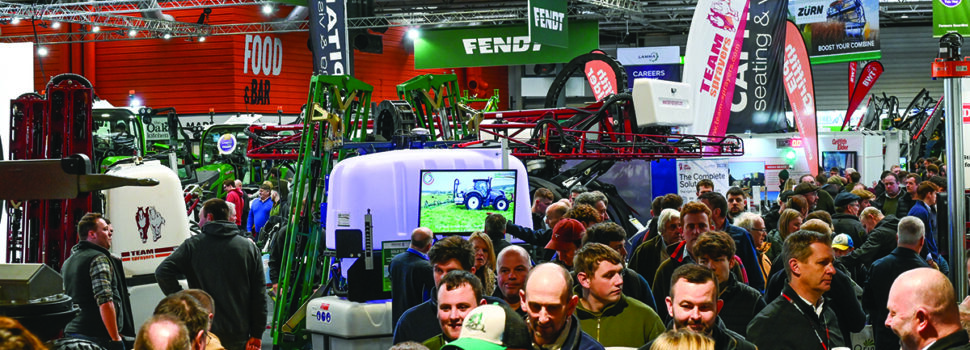
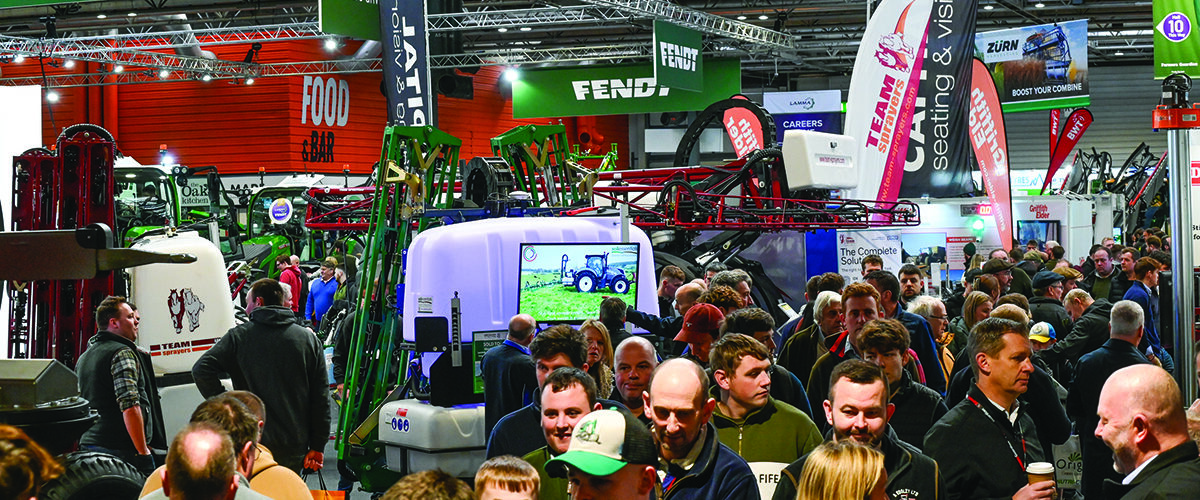
Final touches are being put in place for next month’s LAMMA event, which takes place at the Birmingham NEC on 14-15 January.
More than 600 exhibitors will showcase the the latest innovations in tractors, combines, arable and grassland machinery, say organisers, giving visitors the opportunity to see a range of new technology, services and tools.
Agricultural machinery manufacturers and farm technology companies are preparing for LAMMA 2026, with the sector approaching the new year focused on efficiency, labour-saving equipment and clear returns on investment.
The annual event remains the largest machinery showcase in the UK and is expected to draw strong attendance from growers and livestock producers weighing their capital spending plans for the season ahead.
The conversation in 2026 is markedly more pragmatic than in past cycles – understandable when farmers are scrutinising running costs, finance terms and in-field performance more closely than at any point in the past decade.
Higher interest rates and uneven commodity markets have sharpened the emphasis on kit that reduces labour demands, trims fuel and fertiliser use, or delivers operational consistency in unpredictable weather.
Technology
This shift is reflected in the exhibitor line-up, with manufacturers prioritising incremental improvements – better telemetry, simpler servicing, more adaptable implements – over headline-grabbing prototypes.
Manufacturers will use the show to set out how their products fit into a tightening regulatory landscape. Machinery designed to support soil health, reduce compaction or enable controlled-traffic systems is expected to feature prominently.
Precision technology will remain a steady draw as growers explore ways to reduce inputs without compromising output. The demand is less for futuristic concepts and more for tools that can slot seamlessly into existing systems.
Farm energy
Energy now sits closer to the mainstream within the show. Several firms plan to present equipment aimed at on-farm power generation and energy management, reflecting wider interest in diversification as a buffer against market volatility.
Battery-ready machinery, hybrid tractors and lower-emission engines continue to develop steadily, though few in the industry expect a rapid transition away from diesel in the near term.
Dealers will use LAMMA to gauge buying sentiment ahead of the spring order window. Many expect farmers to delay decisions until they have greater clarity on commodity prices, environmental scheme payments and the wider economic picture.
Event brings three shows together
Lamma 2026 will be co-located with two other key shows – giving visitors the opportunity to visit three events in one location.
The Low Carbon Agriculture Show and CropTec are both taking place at the NEC on the same two days – two separate but complementary events likely to be of interest to many farming visitors.
The Low Carbon Agriculture Show is the UK’s only event dedicated to showcasing low-carbon practices, cutting-edge technology, and energy solutions for a sustainable farming future.
It aims to bring together forward-thinking farmers, landowners, and industry operators to explore how the agricultural sector can contribute to UK Net Zero goals in a way that is good for their farm businesses and the environment.
Practical advice
The CropTec show will feature three keynote theatres focusing on Innovation, Knowledge and Profit, to provide visitors with practical advice to futureproof their arable farm businesses.
Organisers say they’ll be shining a light on the industry’s key topics, including crop varieties, eco-friendly fertilisers, pesticide regulations, disease management, crop rotations and diversification.
Growers from across the UK will share their experiences in adopting different farming systems for their business, their arable best practices and the learnings that farmers can take from each other.